
You clean up your diet.
You take zinc, vitamin B6 and the right supplements.
You improve for a while.
Then stress ramps up, your digestion flares up, you eat badly for a few days, drink more alcohol than usual, take antibiotics, stop sleeping properly or get run down… and suddenly the anxiety, brain fog, bloating, irritability, poor stress tolerance and overwhelm all come flooding back again.
For many people with pyroluria, the missing piece is the gut.
Because while pyroluria is often discussed as a nutrient issue involving zinc and vitamin B6, the gut plays a major role in how well the body absorbs, uses and holds onto those nutrients in the first place.
And when the gut is inflamed, irritated or overloaded, the body can start using nutrients faster than it can absorb and replace them.
This is the pattern many people experience:
You improve for a while… then keep sliding backwards again.
Often the missing link is not simply needing more supplements — it is understanding what keeps draining the system in the first place.
Jump to:
How The Gut Affects Stress, Mood And Pyroluria Symptoms
Most people think of the gut as simply digesting food.
But the gut is also heavily connected to the nervous system, immune system, inflammation levels, hormone balance and even how the brain responds to stress.
When digestion is working properly, food is broken down more effectively, nutrients are absorbed properly, the gut lining stays healthier and the immune system is exposed to less irritation and inflammatory stress.
But many people with pyroluria notice something else happening as well.
Whenever their digestion worsens, everything else seems to worsen with it.

They eat badly for a few days, drink more alcohol than usual, get run down, take antibiotics or go through a stressful period… and suddenly the bloating, brain fog, anxiety and overwhelm all start ramping up together.
Foods they normally tolerate suddenly affect them.
Their stomach feels bloated and more irritated after meals.
They become more reactive, emotionally sensitive or easily overwhelmed.
Their concentration drops off.
Sleep often worsens.
And small amounts of stress become much harder to handle.
This is a pattern we commonly see when poor digestion, gut inflammation and microbial overgrowth start placing extra pressure on the nervous system and immune system.
Common signs the gut may be contributing include:
- Bloating or discomfort after meals
- Reacting to foods you normally tolerate
- Strong cravings for sugar, bread or carbohydrates
- Brain fog or difficulty concentrating
- Feeling more anxious, agitated or emotionally reactive after eating badly
- Poor tolerance to alcohol
- Feeling tired, mentally slow or struggling to concentrate after meals
- Loose stools, constipation or fluctuating bowel habits
- Coated tongue or bad breath
- Recurring thrush or fungal skin issues
- Skin flare-ups
- Feeling flat, low, irritable, depressed or emotionally overwhelmed when digestion worsens
When stress, poor digestion and nutrient depletion all start feeding into each other, many people find they need support for the nervous system as well as the gut.
Our NatroVital Pyrrole Support was designed to help support zinc, vitamin B6, stress tolerance, nervous system function and the nutrient demands commonly associated with pyroluria.
Why Poor Gut Function Can Drain Zinc And Vitamin B6
Zinc and vitamin B6 are two of the major nutrients involved in pyroluria.
But they are not just important for mood.
They are also needed to maintain the gut lining, support digestion and help the body cope with physical and emotional stress.
When the gut becomes inflamed or irritated, the body starts using larger amounts of these nutrients trying to repair the digestive tract and keep inflammation under control.
This is why many people notice their pyroluria symptoms flare up when their digestion worsens.
Over time, the cycle can also run in the other direction. Ongoing stress, poor sleep and nervous system overload can reduce digestive secretions, affect bile flow and make it harder for the gut lining to repair properly.
As digestion and gut health worsen, many people notice their pyroluria symptoms start ramping up again.
The anxiety becomes stronger.
Stress feels harder to handle.
The brain slows down.
Motivation drops off.
And they often feel more emotionally reactive, exhausted or overwhelmed.
This is also one reason some people improve with supplements initially, but then start sliding backwards again after stress, alcohol, antibiotics, poor diet or digestive flare-ups.
If the gut remains inflamed or unhealthy, the body may continue struggling to hold onto the very nutrients it needs to function properly.
What Dysbiosis Means And Why It Matters
Dysbiosis simply means the balance of microorganisms inside the gut has shifted in an unhealthy direction.
Instead of the gut being dominated by healthier and more supportive bacteria, irritating or opportunistic organisms can begin taking over.
This can include certain bacteria, yeast, parasites, fungal overgrowths or other microbes that start fermenting food more aggressively, irritating the digestive tract and placing extra pressure on the immune and nervous systems.
For some people, this develops slowly over years after repeated antibiotics, chronic stress, poor diet, alcohol, infections, poor sleep or long periods of physical and emotional burnout.
As the gut environment changes, people often start noticing symptoms like bloating, excessive wind, sugar cravings, coated tongue, bad breath, loose stools, constipation, food reactions, skin flare-ups, brain fog and worsening stress tolerance.
Many also notice they become more reactive to foods, alcohol and stress than they use to be.
This is partly because the gut is no longer breaking food down properly or maintaining a healthy barrier between the digestive tract and the immune system.
Instead, irritation inside the gut can start triggering low-grade inflammation and immune activation throughout the body.
For people with pyroluria, this added stress can place even more pressure on nutrients like zinc and vitamin B6, while also making the nervous system feel more overwhelmed, reactive and emotionally fragile.
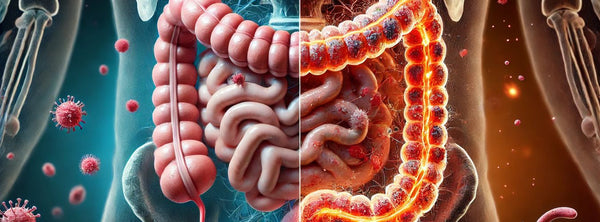
How Gut Inflammation And Damage To The Gut Lining Can Worsen Symptoms
The lining of the digestive tract acts as a protective barrier between the inside of the gut and the rest of the body.
When this lining becomes irritated, inflamed or damaged over long periods, the barrier can start functioning less effectively.
This is often referred to as increased intestinal permeability, or what many people know as “leaky gut”.
In simple terms, the gut lining becomes more irritated, more inflamed and less selective about what passes through it.
This can place extra pressure on the immune system and increase irritation throughout the digestive tract and body.
Stress, alcohol, highly processed foods, infections, microbial overgrowth, medications, poor sleep and ongoing digestive irritation can all contribute to this process.
When this happens, the immune system inside the gut often becomes more activated and sensitive.
People may start reacting more strongly to foods, chemicals, stress and environmental triggers that previously caused little or no issue.
The digestive tract can also become less effective at properly breaking down and absorbing nutrients from food.

This is important because nutrients like zinc and vitamin B6 are heavily involved in maintaining the gut lining, supporting immune balance and helping regulate inflammation throughout the digestive tract.
When the gut remains inflamed or irritated, the body can end up using larger amounts of these nutrients simply trying to maintain and repair the digestive tract.
This is one reason many people with pyroluria notice their symptoms worsen after periods of stress, poor sleep, alcohol, antibiotics or digestive flare-ups.
The more pressure placed on the gut and immune system, the more people often notice worsening fatigue, brain fog, food reactions, irritability, anxiety and poor stress tolerance.
Think of it like trying to fill a bucket with a hole in the bottom.
You can keep adding nutrients, but if gut inflammation, poor digestion and ongoing irritation continue increasing nutrient demand and impairing absorption, it becomes much harder for the body to stabilise.
Signs Your Gut May Be Driving Symptoms
For some people with pyroluria, the gut ends up becoming one of the biggest things keeping the body stressed out.
They often notice their digestion, mood, energy and stress tolerance all seem to worsen together.
When the gut flares up, everything else often flares up with it.
Some of the more common signs include:
- Bloating or discomfort after meals
- Excess wind or abdominal distension
- Reacting to foods you normally tolerate
- Strong cravings for sugar, bread or carbohydrates
- Feeling mentally slow or struggling to concentrate after eating
- Poor tolerance to alcohol
- Feeling more anxious, low or irritable when digestion worsens
- Loose stools, constipation or fluctuating bowel habits
- Coated tongue or bad breath
- Needing coffee, sugar or carbohydrates just to keep functioning
- Feeling exhausted after meals
- Skin flare-ups or recurring fungal skin problems
- Feeling worse after antibiotics
For some people, these symptoms come and go.
For others, they slowly become part of everyday life until they no longer realise how much their gut is affecting the way they think, feel and function.
What To Do Next
If you recognise yourself throughout this article, the goal is not simply throwing more supplements at the problem.
The real goal is reducing the things that keep pushing the nervous system, immune system and digestive system into a constant state of stress.
For many people, this means looking at what keeps driving the cycle in the first place.
Not just zinc and vitamin B6 levels… but also digestion, gut inflammation, food reactions, microbial overgrowth, stress load and how well the gut is actually repairing itself.
Because when the gut remains inflamed or irritated, people often continue feeling anxious, overwhelmed, mentally exhausted and reactive no matter how many supplements they take.
In clinic, this often involves a combination of:
- Supporting zinc and vitamin B6 levels
- Reducing foods and habits aggravating the gut
- Improving digestion and absorption
- Helping calm inflammation inside the digestive tract
- Supporting microbial balance
- Repairing and strengthening the gut lining
Once the gut starts calming down, many people notice they feel mentally clearer, emotionally calmer and cope with stress far better than they use to.
Supporting The Gut Alongside Pyroluria
When digestive symptoms, food reactions, bloating or poor stress tolerance are part of the picture, supporting the gut alongside pyroluria often becomes an important part of recovery.
Some people need more focus on microbial overgrowth, bloating, coated tongue, sugar cravings and digestive support, while others need deeper support for repairing and calming the gut lining after years of stress, inflammation or digestive irritation.
Bringing It All Together
For many people, pyroluria is not just about nutrients.
It is about understanding what keeps pushing the body backwards.
And for some people, poor gut function is one of the major drivers.
The more inflamed, irritated and dysfunctional the gut becomes, the harder it is for the body to maintain healthy nutrient levels, regulate stress, control inflammation and keep the nervous system stable.
That is why improving gut health can sometimes make a huge difference to how a person feels emotionally, mentally and physically.
Because when the gut becomes healthier and less inflamed, many people notice they think more clearly, handle stress better, react less to foods and start feeling more like themselves again.
Helpful Next Reads
The information provided in this article is for educational purposes only and is not intended to diagnose, treat, cure or prevent any disease. Product information is general in nature and should be considered in the context of your individual health needs.